
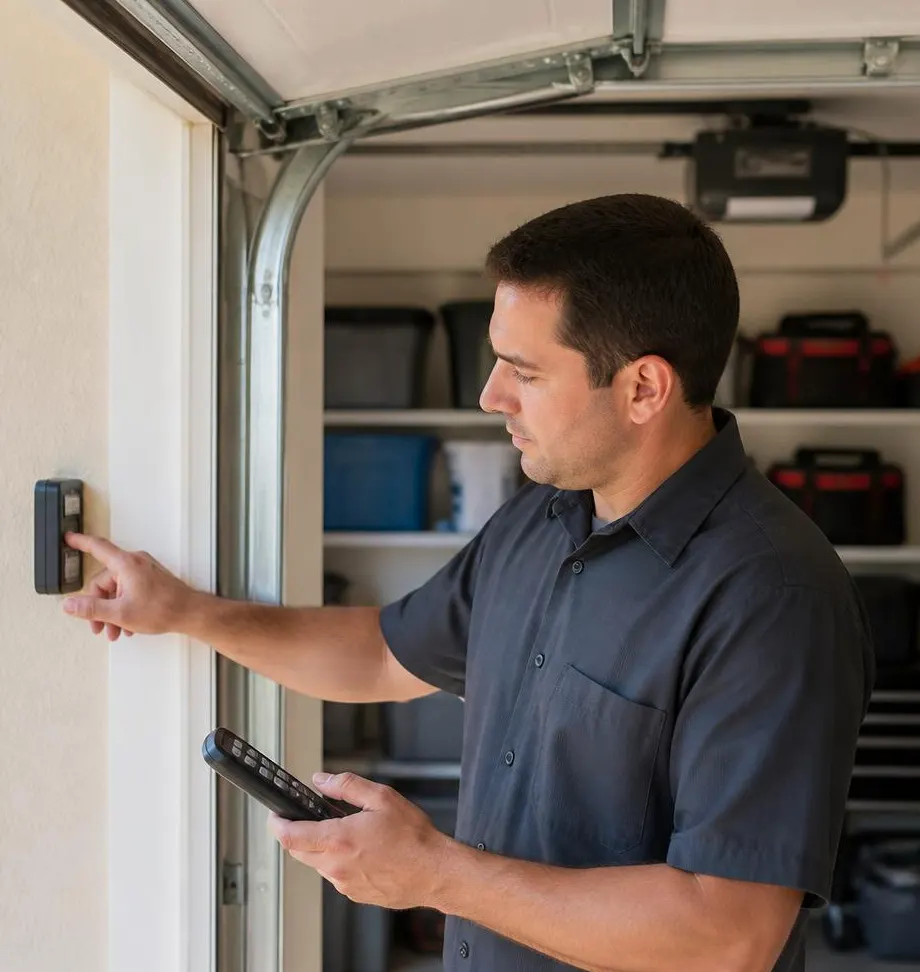
Short answer: before the rain starts, clear out the summer dust, replace worn weatherstripping, lubricate the moving hardware, and test the auto-reverse safety sensors. Most garage door problems that show up here in winter trace back to dust-clogged tracks and water intrusion from the dry months, not the cold itself.
Why Fall Is the Right Time to Prep
Summer and early fall in this part of California mean long dry stretches, blowing dust, and sometimes wildfire smoke that settles into everything, including your garage door tracks, rollers, and weatherstripping. That residue doesn't cause problems on its own—until the first real rain shows up and turns dust into grime, or water starts finding its way through seals that have dried out and cracked over the summer. Winters here don't bring snow, but they do bring steady rain, wind storms, and the occasional power outage, all of which stress a garage door system that hasn't been checked since spring. If your house has had earthquake retrofit work done, it's also worth a quick visual check that nothing around the garage opening shifted or settled, since even small frame movement can throw off door alignment.
The Pre-Winter Checklist
1. Clear the Tracks and Rollers
Run a dry cloth or soft brush along the inside of both tracks to remove dust and debris buildup. Dirty tracks make the door work harder, which strains the opener motor and can cause the door to bind or run unevenly—something you'll notice more once rain adds moisture to that dust and it turns gritty.
2. Replace Worn Weatherstripping
Check the rubber seal along the bottom of the door and the vinyl strips along the sides. If they're cracked, flattened, or pulling away from the frame, water will find the gap during heavy rain. Weatherstripping is inexpensive and one of the few garage door repairs a homeowner can handle in under an hour with basic tools.
3. Check the Threshold and Drainage
Stand at the base of your garage door and look at how water would flow if it rained right now. If the driveway or slab slopes toward the garage instead of away from it, even new weatherstripping won't stop water from pooling against the door. This is more of a long-term fix, but it's worth knowing about before the first storm rather than after.
4. Lubricate the Moving Parts
Rollers, hinges, and the torsion spring all need a light coat of lubricant before the wet season. Use a silicone-based garage door lubricant rather than household grease or WD-40—grease attracts dust and dirt, which is exactly the buildup you're trying to avoid after a dry summer, while WD-40 is a cleaner, not a lasting lubricant. Avoid over-lubricating the track itself; the rollers need it, not the track surface.
5. Test the Auto-Reverse Safety Sensors
Humidity and temperature swings between a hot afternoon and a cool, damp morning can cause small shifts in sensor alignment over time. Place a cardboard box in the door's path and close it—the door should reverse immediately on contact. If it doesn't, or if the door closes partway and reverses on its own, the sensors may be dirty, misaligned, or wired loosely. This is a safety issue, not a convenience one, and it's worth fixing before the busier winter months when the door gets used in low light and wet conditions.
6. Inspect Springs and Hardware for Rust
Look at the torsion spring above the door and the hardware along the tracks for any orange or reddish discoloration. Rust weakens metal over time, and a spring that's starting to corrode is more likely to fail under tension—often without much warning. This is one item to inspect, not to fix yourself; torsion springs are under enough tension to cause serious injury if handled without the right tools.
7. Consider a Battery Backup for the Opener
Winter storms occasionally knock out power for a few hours at a time. A battery backup system for your garage door opener means you're not stuck manually hauling the door open in the rain if the power goes out while you're heading to work or coming home.
Signs Your Door Isn't Ready for Winter
- Random reversing: The door closes partway and goes back up without an obstruction—often a sensor or sensitivity setting issue.
- Grinding or scraping noise: Usually dust-dry rollers or hinges that need lubrication before they wear further.
- Slow or sluggish movement on cold mornings: Old lubricant thickening in cooler temperatures, or a spring that's losing tension.
- Visible rust or pitting: On springs, hinges, or the bottom of the door panel, especially where water has been sitting.
- Daylight visible around the closed door: A clear sign weatherstripping has failed and needs replacing before the rain starts.
When to Call Rocklin Garage Door
If you spot rust on a spring, hear the door straining, or the sensors won't stay aligned no matter how many times you adjust them, it's time to call in a professional rather than keep troubleshooting. Our garage door maintenance service covers a full inspection, lubrication, and hardware tightening so small issues don't turn into a mid-storm breakdown. If a spring is already showing wear or has failed, our spring replacement service handles the job safely with the right tools and tension equipment—not something to attempt on your own. And if a storm does knock your door out of commission, we offer emergency service to get it working again quickly.
If you're in Rocklin, Roseville, Lincoln, Loomis, Granite Bay, Auburn, Citrus Heights, or Folsom and want your garage door ready before the rain sets in, give Rocklin Garage Door a call today.